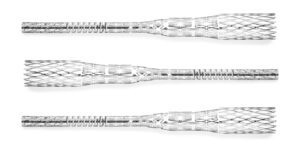
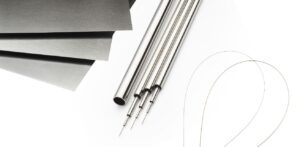
Nitinol has become one of the most important, advanced materials in the medical device industry. Its unique combination of shape memory and superelastic properties enable devices that can flex, recover, expand, compress, and perform inside the body in ways that many conventional metals cannot.
These same advantages also make nitinol a highly complex material to specify, manufacture, test, and qualify. Small variations in chemistry, melting practices, transformation temperatures, microstructure, inclusion content, and processing history can significantly influence material behavior and ultimately affect device performance.
As nitinol applications continue to expand across structural heart, neurovascular, electrophysiology, neuromodulation, ophthalmology, and other minimally invasive medical technologies, the importance of robust material standards continues to grow. This blog covers these material standards, known as ASTM standards, and both Resonetics involvement and the evolution of material standards for nitinol in the industry.
What Are the ASTM Standards for Nitinol?
An ASTM standard is a technical document developed by ASTM International that establishes specific guidelines, procedures, or requirements for materials, products, or services. ASTM standards play a critical role in creating consistency across the nitinol supply chain. They establish common requirements for material chemistry, mechanical properties, metallurgical characteristics, testing methodologies, certification practices, and product classifications. These standards provide a shared technical framework for material producers, medical device manufacturers, testing laboratories, and regulatory stakeholders.
Today, the ASTM standards for nitinol are undergoing significant development. Revisions to established specifications and the creation of new standards for additional product forms are helping build a more comprehensive framework for nitinol materials used in medical devices and surgical implants.
At Resonetics, technical experts actively participate in ASTM committees and working groups that develop, revise, and maintain industry standards for nitinol. Building on many years of involvement by Resonetics engineers and metallurgists in the evolution of ASTM nitinol standards, the company continues to help shape the future of material specifications through leadership roles in active ASTM work items while contributing to the broader medical device community.
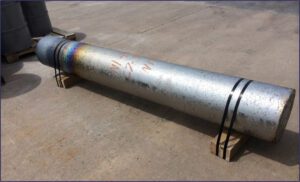
Why do ASTM Standards Matter for Nitinol?
Unlike many conventional engineering alloys, nitinol’s performance is not defined solely by chemical composition. Material properties are highly dependent on melting and remelting practices, processing routes, thermomechanical history, transformation temperatures, inclusion content, and microstructure. Because nitinol is used in critical medical devices, from minimally invasive delivery systems to long-term implants, consistent material performance is essential to device reliability, regulatory compliance, and patient safety.
Because of this complexity and the importance of patient safety, standardized material requirements are essential. ASTM standards help establish expectations for:
- Chemical composition
- Mechanical properties
- Metallurgical requirements
- Microstructure
- Micro cleanliness
- Product classification
- Sampling requirements
- Testing protocols
- Material certification
- Traceability requirements
These standards help ensure that material properties are consistently defined and communicated across the medical device supply chain. They also support product quality, regulatory confidence, more effective collaboration between material suppliers and device manufacturers, and consistent performance of devices intended for patient use.
For nitinol, this consistency is especially important because the material is highly sensitive to chemical composition and processing. Melting or remelting, for example, can fundamentally alter chemistry, microstructure, and resulting properties. Clear standards help ensure that critical material characteristics are understood, measured, documented, and communicated in a consistent way.
ASTM Nitinol Standards for Medical Devices: Updates to F2063, F2633, and Emerging Specifications
Early medical adoption of nitinol occurred before a comprehensive list of standards existed. As use of the material expanded, the industry faced challenges related to variability in transformation temperatures, impurity levels, processing methods, and material behavior.
In 2000, ASTM F2063 emerged as a response to the unique thermomechanical nature of nitinol and the need for a standardized material specification for wrought nickel-titanium shape memory alloys used in medical devices and surgical implants. Over time, the standards landscape has continued to mature, with additional specifications developed for tube products and other nitinol product forms.
This evolution reflects the growing importance of nitinol as a regulated biomaterial. What began as a specialized material for select applications is now a foundational platform for a wide range of medical technologies. As applications become more sophisticated, standards must continue to evolve alongside manufacturing processes, testing methods, and device requirements.
ASTM F2063: A Core Standard for Wrought Nitinol Mill Products
ASTM F2063 is one of the cornerstone standards for nitinol materials used in medical devices and surgical implants. The specification covers wrought nickel-titanium shape memory alloys and defines key chemical, physical, mechanical, and metallurgical requirements for applicable mill products.
Since its initial release in 2000, ASTM F2063 has undergone multiple revisions to address evolving industry knowledge and technical needs. Updates over time have included changes to inclusion size and area fraction requirements, carbon, oxygen, and nitrogen requirements, tensile strength requirements, definitions for key material terms, and requirements for microstructure and inclusion assessment.
The current revision activity for ASTM F2063 is focused on improving clarity, consistency, and technical applicability. These updates are intended to help users better understand the scope of the standard, apply product classifications more consistently, and improve interpretation of testing, certification, and microcleanliness requirements. Resonetics’ own Weimin Yin served as technical lead for the 2026 ASTM F2063 revision effort. This role included helping guide technical review, ballot activity, terminology refinement, and the continued evolution of the specification to better support the nitinol and medical device communities.
Key Areas of Focus in the ASTM F2063 Revision
The ongoing ASTM F2063 revision includes several important updates designed to make the standard clearer and more practical for industry use.
One key area is scope clarification. The revised language more clearly defines the product forms covered by the standard, including wrought nickel-titanium bar, plate, coil, and hollow products containing nominally 54.5 to 57.0 weight percent nickel for use in medical devices and surgical implants.
This type of clarification matters because nitinol product forms are not interchangeable. Bar, plate, coil, hollow product, tube, wire, sheet, and strip each have different processing routes, dimensional considerations, testing expectations, and end-use applications. Clear terminology reduces ambiguity between purchasers, suppliers, material producers, device manufacturers, and regulatory reviewers.
The revision also refines and adds terminology, including terms such as “billet,” “lot,” “producer,” and “supplier.” These definitions help establish more consistent language for material documentation, certification, and supply chain communication.
Additional updates include revised product classification language, updated product analysis guidance, test and retest guidance, and appendices designed to support better understanding of chemical check analysis, microcleanliness, elongation, and area reduction.
Together, these changes help make ASTM F2063 more precise and easier to apply in real-world manufacturing, testing, and quality documentation environments.
ASTM F2633: Supporting Nitinol Tube Products
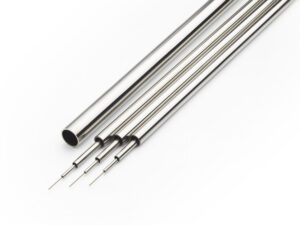
While ASTM F2063 serves as the foundational specification for wrought nitinol mill products, ASTM F2633 focuses specifically on wrought nickel-titanium shape memory alloy tube used in medical devices and surgical implants. The standard provides requirements tailored to a product form that has become increasingly important in minimally invasive medical device manufacturing.
Nitinol tube serves as the starting material for many complex medical devices and components. Because tube manufacturing introduces unique dimensional, metallurgical, and processing considerations compared to other product forms, a dedicated specification helps ensure more consistent characterization and evaluation of these materials.
Since its initial release in 2007, ASTM F2633 has evolved alongside advancements in nitinol manufacturing and processing technologies. Previous revisions have updated terminology, aligned the document with ASTM committee templates, accommodated alternate transformation temperature requirements, and reorganized inclusion-related requirements to improve clarity and usability.
The current revision effort focuses on further improving clarity and practicality for both material suppliers and device manufacturers. Proposed updates include:
- Expanding the covered tube size range from 10 mm OD to 12 mm OD.
- Replacing the general term “room temperature” with a defined test temperature of 22°C ± 2°C.
- Refining language throughout the specification for consistency with ASTM F04.12 committee requirements and improved interpretability.
These revisions reflect a broader trend across the ASTM Nitinol standards portfolio: increasing precision in terminology, testing conditions, and product definitions. While some of the revisions may appear minor, clarifying requirements such as testing temperature and dimensional coverage can help reduce ambiguity and improve consistency across manufacturers, testing laboratories, and device developers.
Resonetics’ Igor Drugov serves as technical lead for the 2026 ASTM F2633 revision effort and works with other industry experts to help ensure the specification continues to support evolving manufacturing capabilities and medical device requirements.
Emerging Standards for Nitinol Wire, Sheet, and Strip
In addition to revisions of existing standards, the ASTM nitinol portfolio is expanding to address additional semi-finished product forms, including wire, sheet, and strip.
This is an important development for the industry. Once finalized, standards for these product forms will help create a more comprehensive framework for major wrought nitinol materials used in medical devices and surgical implants.
The developing nitinol wire specification is intended to address requirements such as geometry and mechanical properties. Technical discussion has included topics such as non-round geometries, tensile property requirements, residual elongation, and appropriate test temperature requirements.
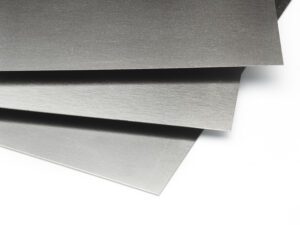
The developing sheet and strip specification addresses unique requirements associated with flat nitinol products, including two-dimensional geometry and anisotropic tensile properties. These product forms can present different technical considerations than bar, tube, or wire, making dedicated standards important for consistent specification and evaluation.
Weimin Yin is also serving as technical lead for the developing sheet and strip specification. This work is helping establish clearer expectations for a product category that is increasingly important for advanced nitinol medical device applications.
What is Resonetics’ Role in Advancing Nitinol Standards?
ASTM standards development is a collaborative effort involving technical experts from across industry, academia, testing organizations, and the broader standards community. Resonetics actively contributes to this work through the participation and leadership of its technical team members.
Weimin Yin and Igor Drugov are directly involved in active ASTM standards work related to nitinol mill products, tube products, and emerging semi-finished product specifications. Their contributions include helping review technical requirements, refine terminology, respond to ballot comments, and guide revisions that support more consistent application of the standards.
This involvement reflects Resonetics’ commitment not only to manufacturing high-quality nitinol materials and components, but also to advancing the technical foundation that supports the broader medical device industry.
By helping revise and create ASTM standards, Resonetics experts contribute to a shared framework that benefits material producers, device manufacturers, testing laboratories, regulatory stakeholders, and ultimately the patients who rely on medical technologies made from nitinol.
A More Complete ASTM Standards Portfolio for Nitinol
The ASTM standards portfolio for nitinol continues to move toward more comprehensive coverage of major wrought product forms. Revisions to ASTM F2063 and ASTM F2633, combined with the development of new standards for wire, sheet, and strip, represent an important step forward for the medical device industry.
A more complete standards framework can help improve consistency, reduce ambiguity, support clearer communication, and strengthen confidence across the medical device supply chain, ultimately contributing to the development of safe, reliable medical devices and better patient outcomes. It can also help ensure that standards keep pace with advances in material processing, device design, testing methodologies, and manufacturing technologies.
Looking ahead, the nitinol standards landscape will likely continue to evolve. Potential areas of future standards development may include additive manufacturing, thin film technology, nitinol powder, sputtering targets, and ternary or quaternary alloy systems. As innovation continues, standards will remain essential for aligning technical expectations and supporting responsible adoption of new material technologies.
Summary Comparison of Referenced ASTM Nitinol Standards
| ASTM Standard | Primary purpose | Product form / scope | Key requirements or measurements | How it relates to the others |
| ASTM F2063-18 | Defines the foundational material specification for wrought nickel-titanium shape memory alloys used in medical devices and surgical implants. | Applies to wrought NiTi mill products, including bar, flat rolled products, and tubes containing nominally 54.5–57.0 wt% nickel. Finished cold-worked tube is directed to F2633. | Establishes chemical, physical, mechanical, and metallurgical requirements, including annealed tensile properties such as minimum UTS and elongation. | Serves as the base material standard. Other product-specific standards, including F2633, build from or reference its foundational chemistry and material requirements. |
| ASTM F2516-22 | Defines the tensile test method used to characterize superelastic nitinol behavior. | Applies broadly to superelastic nickel-titanium materials rather than one specific product form. | Provides methods for determining upper plateau strength, lower plateau strength, residual elongation, tensile strength, and elongation. | Acts as the test-method standard. It provides the common language and measurement approach that product specifications can use when defining superelastic performance. |
| ASTM F2633-19 | Defines product-specific requirements for wrought seamless nitinol tube used in medical devices and surgical implants. | Applies to superelastic nickel-titanium tube, nominally 54.5–57.0 wt% nickel, with specified limits for outside diameter and wall thickness. | Sets chemical, mechanical, dimensional, and surface-condition requirements for drawn medical-grade tube, including UTS, uniform elongation, UPS, LPS, and residual elongation. | Bridges the base material specification and the superelastic test method: it relies on F2063 for applicable material requirements and uses F2516-style definitions to set minimum property expectations for tube. |
Conclusion
Nitinol is a powerful enabling material for medical device innovation, but its unique properties require careful control, testing, and specification. ASTM standards such as F2063 and F2633 provide an essential foundation for defining material requirements, improving consistency, and supporting communication across the medical device supply chain.
The ongoing revisions to established nitinol standards, along with the development of new specifications for wire, sheet, and strip, represent an important step toward a more complete and practical ASTM standards portfolio for medical device materials.
Through the active participation of Resonetics experts, including Weimin Yin and Igor Drugov, Resonetics is helping shape these standards for the benefit of the broader nitinol and medical device community. This work supports a shared goal: advancing high-quality, reliable, and well-characterized nitinol materials for the next generation of medical technologies.
Looking for a nitinol manufacturing partner with deep materials expertise? Resonetics supports medical device companies from Melt to Market™ with advanced nitinol processing, component manufacturing, and technical expertise across the full product lifecycle. Contact our team to learn more about our nitinol capabilities.