
NFC Coils
Resonetics® is a leader in planar Near Field Communication (NFC) coils for medical devices, providing receivers and transmitters for both single- and multi-use applications. This low-power, wireless technology enables secure data transmission between devices and supports a wide range of biomedical uses. NFC is often paired with traditional and next-generation sensors to transmit critical data such as temperature, pressure, and other vital signs. Compact and easily integrated, NFC technology allows medical devices to securely communicate and share information during surgical procedures.
NFC Coil Technology
Near-Field Communication (NFC) is a low-power wireless technology built on Radio Frequency Identification (RFID) standards. Designed for close-range use, typically less than 10 cm, it offers inherent data security. NFC can operate in two modes: in Active mode, both coils are powered and exchange data using their own RF fields; in Passive mode, one powered coil generates the RF field that the unpowered device uses to communicate. Resonetics® specializes in designing and manufacturing custom NFC coils, and our engineers can help integrate this technology into your next-generation medical device.
Biomedical Applications for NFC Technology
NFC coils enable the secure data transfer of other sensing technology, including:
- Temperature and pressure sensors
- Electrophysiology sensors
- Blood flow sensors
- Sweat sensors
- Optical metrology
- Epithelial electronic systems
NFC Wireless Connectors for Data Transmission
- Inductive coupling coils for contactless secure data transmission
- Transmit and receive coils can be designed to commercially available EEPROM chip dimensions
- High-density inductive coils
See our Recent News
BLOG
October 1, 2026
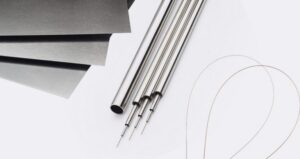
ASTM Nitinol Standards for Medical Devices: Updates to F2063, F2633, and Emerging Specifications
Learn how ASTM Nitinol standards are evolving for medical device materials, including updates to F2063, F2633, and emerging specifications for…
Read More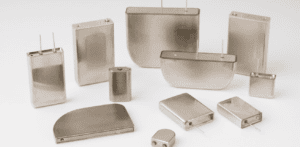
BLOG
August 26, 2026
Why Battery Longevity Matters More Than Capacity in Implantable Medical Devices
When engineers evaluate a battery, it’s natural to focus on day-one performance. Higher capacity, strong power output, and impressive energy density can…
Read More BLOG
August 18, 2026
Implantable Medical Device Batteries 101: How to Choose the Right Power Solution
Choosing an implantable medical device battery involves far more than selecting the highest capacity option. Battery selection can influence device size,…
Read More