Executive Summary
Developing a catheter-based cardiac support device means balancing catheter deliverability, pump performance, anatomical interaction, manufacturability, regulatory requirements, and investor expectations simultaneously. Few startups have the internal resources to solve all of these challenges alone. VenstraMedical’s journey developing a next-generation blood pump highlights how early partnership with a contract development and manufacturing organization (CDMO), including biosimulation and manufacturability planning, helped accelerate learning, reduce risk, and build confidence as the program matured.
Key Takeaways:
- Reduce development risk by visualizing anatomy earlier
- Shorten iteration cycles through biosimulation
- Design with manufacturability before verification
- Choose partners that can scale with your device
- Use realistic performance data to support investor conversations
Why Complex Cardiac Devices Are Especially Difficult to Develop
Temporary circulatory support devices operate in one of the most demanding environments in the human body. Unlike many catheter-based technologies, these systems must often accomplish multiple engineering objectives simultaneously.
In VenstraMedical’s case, the device needed to:
- Collapse into a small delivery profile
- Navigate through the vasculature
- Expand after reaching the target location
- Deliver effective circulatory support
- Collapse again for retrieval
Each requirement affects material selection (e.g., nitinol), mechanical performance, manufacturability, and verification testing.
Engineering Spotlight: Why Nitinol Matters
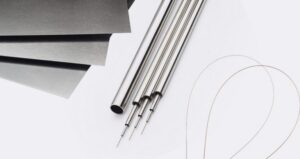
Many next-generation cardiovascular devices rely on nitinol because its superelastic and shape-memory characteristics allow devices to transition between compact delivery profiles and functional deployed states. These capabilities can unlock innovative designs but require careful consideration of manufacturability, fatigue performance, and process development from the earliest stages of development.
Further Reading: Introduction to Nitinol Whitepaper
For development teams, this creates a difficult balancing act.
| Development Challenge | Impact on Program |
| Complex anatomy | Increased design iterations |
| Catheter deliverability | Tight design tolerances |
| Expandable structures | Material and fatigue challenges |
| Physiological interaction | More extensive testing requirements |
| Future commercialization | Need for scalable manufacturing processes |
The result is a development environment where every design decision may affect multiple aspects of device performance.
Lesson 1: Start With Partners Who Believe Complex Problems Can Be Solved
Early-stage device innovation often involves uncertainty. Concepts may not be fully defined, design pathways may evolve, and technical hurdles are inevitable.
As an early-stage developer, VenstraMedical wasn’t looking for a traditional supplier. The company needed a design, development, and engineering partner that could help solve complex technical challenges, iterate concepts, and support the program as it matured. For VenstraMedical, that partner was Resolution Medical, now part of Resonetics.
According to Martin Cook, CEO and Co-Founder of VenstraMedical:
“Our needs were people who didn’t think it was impossible.”
For emerging companies, that mindset can be more valuable than any individual capability.
Many breakthrough technologies initially appear difficult to manufacture, test, or scale. Development teams that approach challenges with curiosity and engineering rigor often help innovators move forward faster than those focused solely on predefined execution.
Cook adds that the company needed more than prototype support:
“We needed a team that could work with us from the earliest stages, build initial prototypes, and grow with us as the device moved toward a more clinically ready product.”
Successful cardiac device programs are rarely built by suppliers executing isolated tasks. They are often built through long-term engineering and manufacturing partnerships that span concept development, design refinement, prototyping, manufacturability planning, process development, and eventual commercial scale-up.
Lesson 2: Visualize Anatomy Early to Inform Better Design Decisions
One of the most overlooked challenges in cardiovascular device development is understanding how a design truly interacts with patient anatomy.
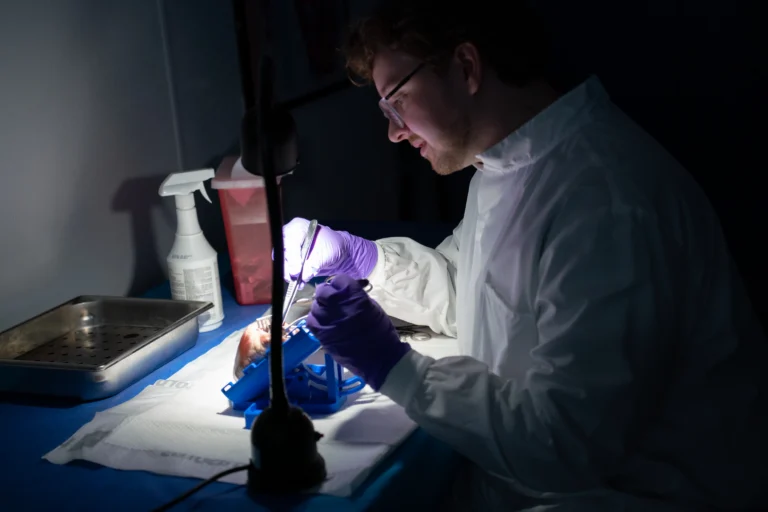
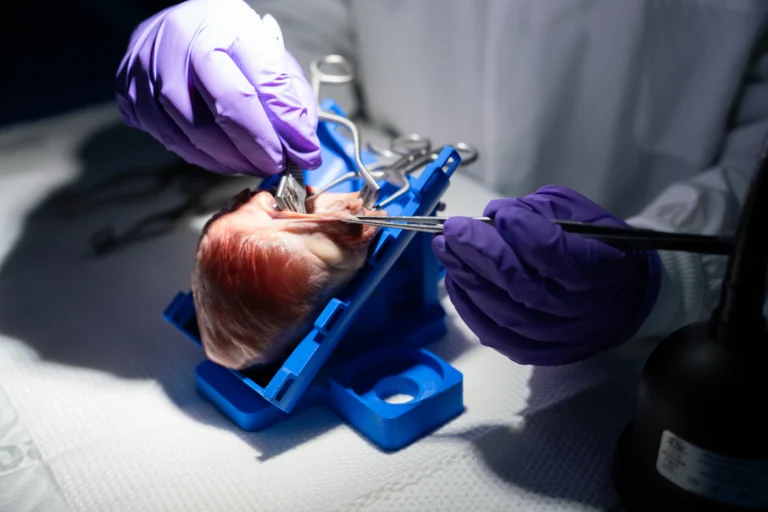
Computer models, bench testing, and engineering calculations provide valuable information. However, seeing a device operate within a realistic physiological environment can reveal insights that are otherwise difficult to identify.
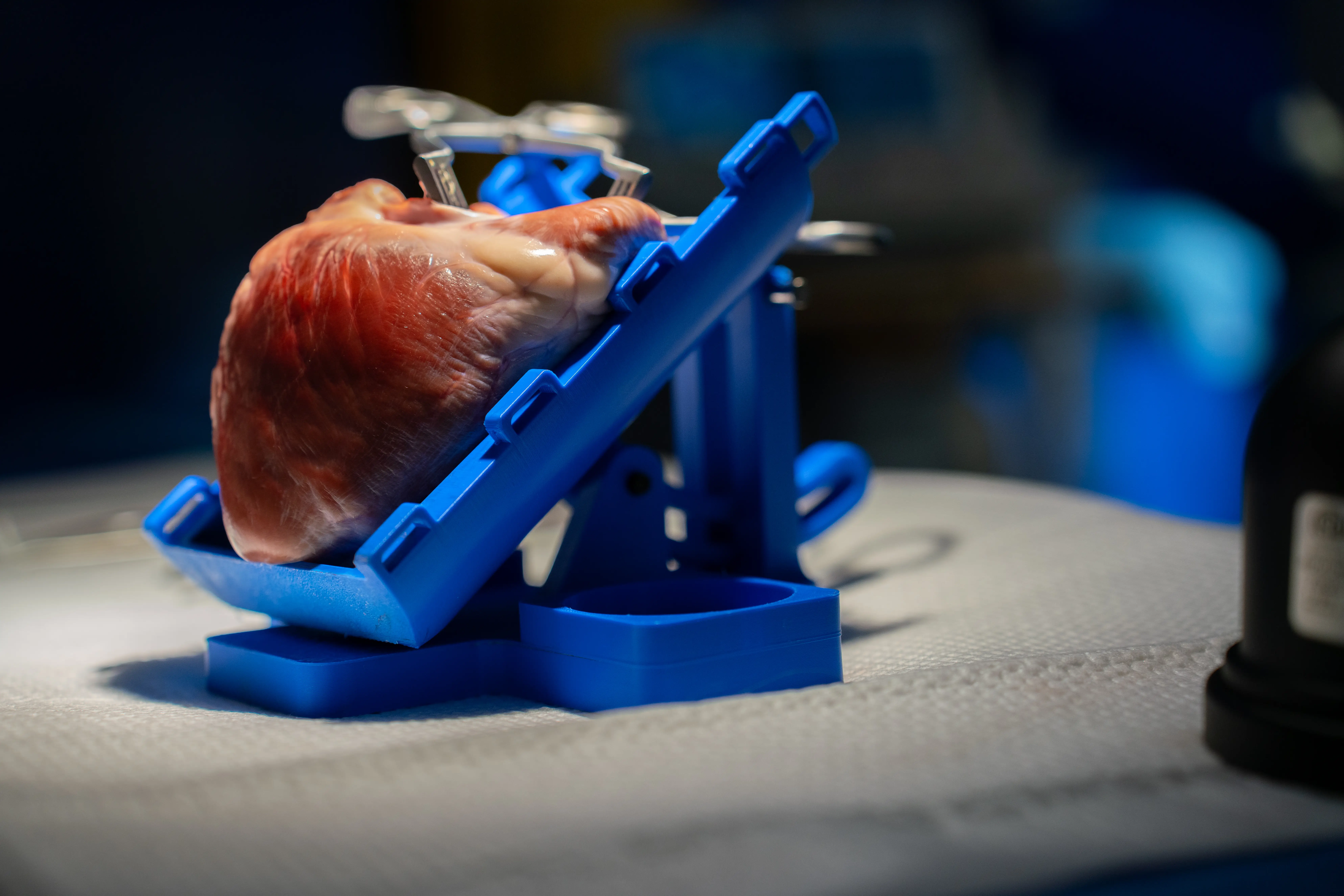
Cook recalls the impact of observing the device within a simulated cardiac environment:
“It’s one thing to know the inside of the left ventricle is complex. ”
“It’s another thing to see your device sitting there and understand how it interacts with that anatomy.”
That visibility helped the team make important decisions regarding positioning, interaction with surrounding structures, and overall device configuration.
For many cardiac development programs, anatomical visualization can help teams:
- Identify interference risks
- Refine deployment strategies
- Improve procedural understanding
- Reduce late-stage design changes
- Build confidence before clinical evaluation
- Build confidence among investors and strategic partners
The earlier these insights emerge, the less expensive they become to address.
While visualization provided critical anatomical insight, it also established a foundation for faster design learning. Once the team could observe the device within a realistic cardiac environment, they could begin evaluating performance and refining designs with greater confidence.
Lesson 3: Create Faster Feedback Loops to Reduce Design Iterations
One of the biggest drivers of delay in complex cardiac device development is not technical failure, it’s delayed feedback.
Teams often spend months moving through design-build-test cycles, only to discover that a critical assumption was wrong. When feedback comes late, iteration becomes expensive.
For companies developing devices intended to interact dynamically with cardiovascular anatomy, advanced biosimulation environments are becoming an increasingly important part of the development process. Biosimulation platforms such as those developed by LifeTec Group, part of Resonetics, can replicate physiologically relevant conditions, helping teams bridge the gap between bench testing, preclinical evaluation, and eventual clinical use while accelerating learning and reducing development risk. LifeTec’s biosimulation platforms are specifically designed to replicate real-life physiological conditions, enable earlier clinical insight, and help accelerate R&D timelines and iteration cycles.
For VenstraMedical, biosimulation became more than a visualization tool. It became a practical way to evaluate performance, understand how design changes affected device behavior, and accelerate decision making.
According to Cook:
“The biosimulation lab lets people see the device in an environment that is much closer to how it would actually be used. ”
“That has been really positive for us.”
Beyond engineering benefits, these environments can also support physician engagement, procedural understanding, investor discussions, and broader stakeholder alignment. Seeing a device operate in a realistic physiological setting often creates a level of understanding that drawings, simulations, and bench testing alone cannot provide.
Rather than relying solely on engineering assumptions, teams gain the opportunity to observe how design decisions perform in conditions that more closely reflect clinical reality, helping projects move from concept to confidence more efficiently.
Lesson 4: Think Beyond the Prototype
A common mistake among early-stage companies is treating product development and commercialization as separate activities.
While building a functional prototype is a major milestone, successful commercialization requires much more.
Questions that should be addressed early include:
- Can the design be manufactured consistently?
- Are the materials scalable?
- Will tolerances support future volume production?
- What risks could affect transfer to manufacturing?
Many companies discover that a design optimized solely for proof-of-concept work becomes difficult to scale later.
Cook highlighted the value of working with the Resolution Medical engineers (now part of Resonetics) who could support both development and future manufacturing needs:
“They still have that startup culture. They’re willing to take on early-stage development, but they also have the manufacturing capabilities to support where the work goes next.”
Programs that incorporate manufacturability considerations earlier often avoid costly redesigns later in development.
Lesson 5: Flexibility Is a Competitive Advantage for Emerging Companies
Unlike large OEMs, startups rarely operate with fixed resource requirements.
Funding cycles change. Development priorities evolve. Regulatory pathways shift.
As a result, flexibility becomes essential.
Cook describes this advantage clearly:
“Working with Resolution Medical (now part of Resonetics) gives us the best of both worlds. “
“We can stay close to the work while still having the flexibility to ramp up or ramp down as needed.”
Development partners that can adapt alongside a growing company often help reduce both operational and financial risk.
This flexibility becomes increasingly important as programs move through feasibility, verification, validation, and commercialization planning.
Final Thoughts
Developing next-generation cardiac devices requires far more than innovative technology. Success often depends on how effectively teams navigate uncertainty, gather meaningful performance data, and make informed engineering decisions throughout the development process.
VenstraMedical’s journey illustrates several principles that apply broadly across the MedTech industry: engage the right development and manufacturing partner early, use realistic anatomical and performance feedback to guide design decisions, incorporate manufacturability before scale-up, and choose collaborators who can help de-risk innovation as programs move from concept toward clinical readiness.
For innovators pursuing breakthrough cardiovascular technologies, those lessons may prove just as important as the device itself.
Ready to advance a complex cardiovascular device? Connect with Resonetics to explore how integrated design, development, manufacturing, and biosimulation capabilities can help reduce risk, accelerate development, and support the path from early concept to scalable production.